Closed Cell Spray Foam Insulation in St. Louis, MO
Schedule a free consultation
Professional Closed Cell Spray Foam Insulation Services in Greater St Louis
When it comes to maximum thermal protection and structural durability, closed-cell spray foam insulation stands unmatched. At Foam Co, we provide premium polyurethane spray foam services designed to completely seal your property’s envelope, eliminate air leaks, and slash your monthly utility bills across the Greater St. Louis area.
Unlike other insulation types, closed-cell spray foam insulation expands into a dense, rigid barrier. This makes it uniquely suited for specific high-performance applications across St. Peters, Jackson, and the surrounding regions:
- Unmatched R-Value per Inch: Delivering a high R-value (typically around R-6.5 to R-7 per inch), closed-cell foam gives you maximum insulation performance in tight framing setups, making it ideal for comprehensive attic and wall insulation projects.
- Built-In Vapor & Moisture Barrier: Because of its dense, closed-loop molecular structure, it completely rejects water. This makes it the absolute best material for sealing damp Missouri masonry, rim joists, and intensive crawl space encapsulation jobs.
Expert Application for St. Louis Attics & Crawl Spaces
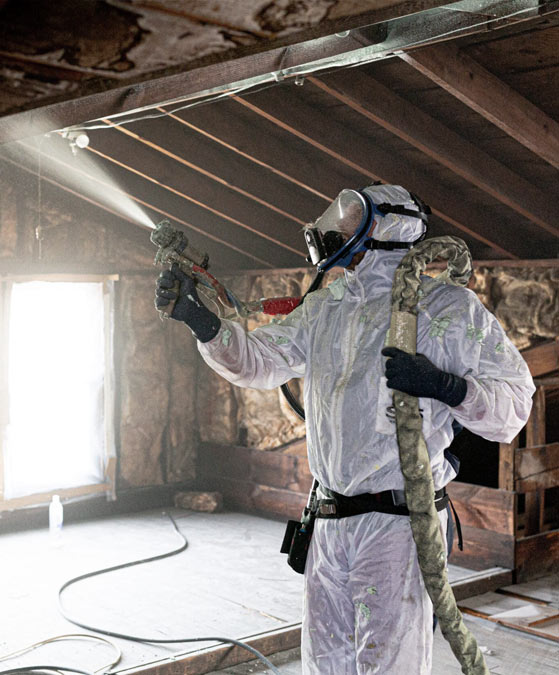
Precision engineering is required when applying closed-cell foam. Our certified installation team uses state-of-the-art rig equipment to ensure perfect mixing ratios and depth control. Whether we are treating high-exposure roof decks, sealing tight rim joists, or treating a moisture-prone crawl space, we ensure your home achieves optimal energy efficiency without the risks associated with amateur DIY methods.
Structural Reinforcement & Durability
Once fully cured, closed-cell foam sets rock-hard, physically gluing your walls and framing together. This high-density material increases the overall racking strength of your residential or commercial building, offering a secondary layer of protection against severe Midwest weather and shifting foundations.
Ready to upgrade to the ultimate thermal barrier? Avoid mistakes and secure your home’s long-term comfort with our proven local team.

Pros & cons of closed cell foam insulation
To help you make the most informed decision for your St. Louis property, here is an honest look at the advantages and primary considerations of choosing premium closed-cell polyurethane foam:
The Advantages (Pros)
- Industry-Leading R-Value: Delivers the highest thermal resistance per inch (up to R-7), allowing maximum efficiency in narrow spaces.
- Class II Vapor Barrier: Forms a dense, impermeable moisture shield that stops water vapor transmission completely.
- Structural Reinforcement: Bonds tightly to framing, drastically enhancing the racking strength and rigidity of walls and roof lines.
- Long-Term Dimensional Stability: Will not sag, settle, compress, or degrade over time, ensuring a permanent lifetime thermal seal.
- Ideal for High-Moisture Environments: The absolute best choice for St. Louis crawl spaces, concrete basements, and below-grade areas.
Important Considerations (Cons)
- Higher Initial Investment: Requires a larger upfront cost compared to standard fiberglass or blow-in insulation, though it provides faster ROI via long-term utility savings.
- Strict Application Standards: Must be applied with specialized commercial rigs under precise temperature controls, which means it cannot be a DIY project.
- Reduced Sound Absorption: Because it cures into a dense, solid plastic structure, it does not dampen acoustics quite as efficiently as light, fluffy open-cell foam.
- Requires Certified Handling: During the rapid chemical reaction (curing process), installers use professional protective gear. Once fully cured within 24 hours, the material is entirely inert, stable, and completely safe for your family.
High-Density Insulation with Unmatched Strength and Moisture Resistance
Closed cell spray foam insulation is one of the most advanced and effective options for homeowners seeking maximum energy efficiency, structural reinforcement, and a reliable moisture barrier. At Foam Co, we provide professional closed cell spray foam insulation services to homeowners in St. Louis, MO, and surrounding areas, including St. Peters and Jackson. Closed cell spray foam insulation can lead to increased comfort by enhancing air quality and creating a more pleasant living environment.
This high-performance insulation type is a denser, more rigid version of spray foam insulation, offering superior air sealing and a high R-value per inch. Whether you’re insulating exterior walls, basements, crawl spaces, roofs, or attics, closed cell spray foam can be installed to provide a seamless, durable solution that delivers long-term energy savings and protection. Professional installation is crucial to ensure optimal performance and safety.
Additionally, closed cell spray foam insulation is highly suitable for residential and commercial applications, enhancing energy efficiency and comfort in various settings. Engaging and educating customers about the installation process, safety precautions, and chemical exposure is essential for making informed decisions and achieving the best results.
How Closed Cell Spray Foam Insulation Works
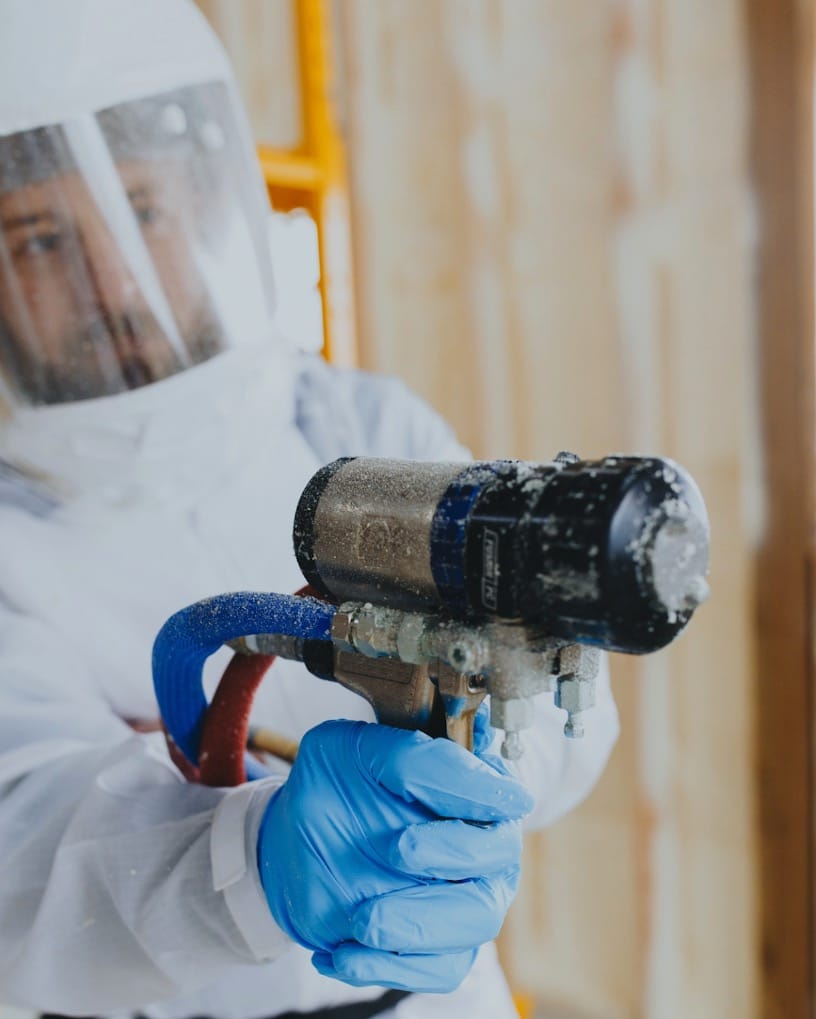
Closed cell spray foam is a type of polyurethane foam. SPF insulation is created through a chemical reaction. A blowing agent is integral to the ‘B’ side of the chemical mixture, which also includes polyols and other additives, and it plays a crucial role in controlling the foam bubble creation process.
Closed cell spray foam is created by mixing two chemical components—polyol resin and isocyanate—on-site, which then expand and harden upon application. This chemical reaction creates the foam. As the foam cures, it forms tiny closed cells filled with a gas that enhances its thermal resistance.
Unlike open cell spray foam, closed cell foam is denser and forms a rigid structure. This makes it ideal for providing not only insulation but also air sealing, moisture resistance, and added structural integrity to walls and building envelopes. SPF insulation enhances energy efficiency and comfort in buildings.
R-Value and Moisture Barrier Benefits
Closed cell spray foam boasts an impressive R-value of approximately 6.0 to 7.0 per inch, making it one of the most thermally efficient insulation products on the market. It minimizes heat transfer by effectively resisting conduction, convection, and radiation. The performance of closed cell spray foam insulation can be measured by its R-value.
The combination of polyurethane and isocyanate in closed cell spray foam contributes to its high R-value and superior performance. Its dense structure prevents air leakage by filling gaps and cracks, enhancing air barrier performance, and offers a strong vapor barrier, protecting your home from condensation, humidity, and water intrusion.
This makes closed cell insulation an excellent choice for:
Basements and crawl spaces where moisture control is critical and improving energy efficiency is essential
Exterior walls for homes exposed to extreme weather
Attics or under-roof decks needing high thermal resistance
Metal buildings and pole barns requiring both insulation and added strength
Air Barrier and Sealing
A well-designed air barrier and sealing system is essential for maintaining energy efficiency and reducing air leakage. Spray foam insulation, including closed cell foam and open cell foam, can act as an air barrier, preventing air from escaping or entering the building. The air barrier and sealing system work together to create an airtight seal, minimizing heat transfer and reducing energy consumption.
Polyurethane foam, a key component of spray foam insulation, helps create a moisture barrier, reducing the risk of moisture accumulation and damage to the building. A proper air barrier and sealing system can be achieved using spray foam insulation, rigid foam, or a combination of materials, depending on the specific needs of the project.
Energy Efficiency and Performance
Energy efficiency is a critical aspect of building design and construction. Spray foam insulation, including closed cell spray foam and open cell spray foam, is a popular choice for improving energy efficiency due to its high R-value and ability to minimize heat transfer and air leakage.
The energy efficiency of a building can be measured by its R-value, which indicates the material’s ability to resist heat transfer. Spray foam insulation can be applied to various surfaces, including walls, floors, and ceilings, to create a comprehensive energy-efficient system. By reducing heat transfer and air leakage, spray foam insulation can help homeowners and building owners save energy and reduce their environmental impact.
Cost Comparisons: Closed Cell vs. Open Cell Spray Foam
Closed cell spray foam is more expensive than open cell due to its higher material density and greater insulation performance, while open cell spray foam has a lower density, providing effective thermal insulation (R-Value of R-3.8 per inch), sound reduction, and air sealing capabilities. The initial costs may be higher, but the long-term savings on energy bills and the added benefits of moisture protection and structural reinforcement justify the investment.
For areas where thermal performance and moisture protection are non-negotiable, closed cell spray foam is well worth the investment.
| Type | R-Value per Inch | Moisture Barrier | Structural Support | Cost |
| Closed Cell | 6.0 – 7.0 | Yes | Yes | $$$ |
| Open Cell | 3.5 – 3.8 | No | No | $$ |
Building Codes and Regulations
Building codes and regulations play a crucial role in ensuring that buildings are constructed with safety and energy efficiency in mind. Key points include:
Spray foam insulation, including closed cell foam and open cell foam, must comply with local building codes and regulations.
- These codes often require a minimum R-value and specific installation procedures.
- Homeowners and building owners must work with certified professionals to ensure compliance.
- Following these guidelines helps create a safe, energy-efficient, and comfortable space that meets occupant needs while minimizing environmental impact.
- When installed correctly, spray foam insulation can help building owners meet or exceed building codes and regulations, providing a high level of energy efficiency and performance.

Frequently Asked Questions
What is closed cell spray foam insulation?
Closed cell spray foam insulation is a type of polyurethane insulation that expands after application and forms a rigid, dense foam with sealed air pockets. These closed cells limit heat transfer and reduce the movement of air and moisture through the building assembly.
Once applied, the foam adheres directly to surfaces such as wood framing, masonry, and roof decking, creating a continuous insulation layer. In residential construction around St. Louis, closed cell spray foam is commonly used in attics, crawlspaces, rim joists, basement walls, and exterior wall cavities where both insulation and air sealing are needed.
Is closed cell spray foam a good option for homes in St. Louis?
Closed cell spray foam can perform well in St. Louis because the region experiences humid summers and cold winters. The material’s density helps reduce heat transfer while also limiting the movement of humid air into building assemblies.
Because closed cell foam also adds some resistance to moisture vapor, it is often used in areas such as crawlspaces, basement walls, and rim joists, where humidity levels can fluctuate. When installed as part of a well-designed building assembly, it can help maintain stable indoor temperatures throughout the year.

Where is closed cell spray foam typically installed?
Closed cell spray foam is often used in areas where air leakage, moisture exposure, or limited space for insulation are concerns. Common installation locations in St. Louis homes include:
Attic rooflines or attic floor assemblies
Rim joists along the perimeter of the foundation
Crawlspace walls
Basement foundation walls
Wall cavities in new construction or major renovations
Because closed cell foam provides a higher thermal resistance per inch than many other insulation materials, it can be useful where framing depth limits insulation thickness.
Does closed cell spray foam help reduce air leaks?
Yes. One of the main characteristics of closed cell spray foam is that it can act as both insulation and an air barrier when applied continuously across a surface. As the foam expands during installation, it fills small gaps and adheres to surrounding materials.
Reducing uncontrolled air movement can help limit drafts and reduce the transfer of humid outdoor air into building assemblies. In homes around St. Louis, where seasonal humidity changes are common, controlling air movement can help stabilize indoor comfort.
How long does closed cell spray foam insulation last?
Closed cell spray foam insulation is designed to remain stable for many decades once installed. The rigid structure of the foam helps it maintain its shape and thermal performance over time.
Because the material adheres directly to the building surface, it typically does not settle or shift like some loose insulation products. Long-term performance still depends on the surrounding building assembly remaining dry and structurally sound, since water intrusion or structural movement can affect any insulation system.
What Our Customers Say...




Housecall Pro
Why Choose Foam Co.?
Foam Co. stands out as your top choice for professional insulation services in St. Peters, MO, Jackson, MO, and the St. Louis metro area. We offer unparalleled convenience, professionalism, and expertise.
You can say goodbye to waiting around all day for technicians with fixed appointments tailored to your schedule. Our commitment to respecting your home means no mess is left behind after installation.
We bring a wealth of knowledge to every job, ensuring optimal results with extensive experience in both commercial and residential insulation.
Trust our team of insulation contractors in St. Louis, MO, to guide and assist in selecting professional insulation services for your needs and budget, delivering peace of mind and satisfaction with every project.