
How Long Does Spray Foam Insulation Last?
Spray foam insulation lifespan refers to how long the material continues to perform its intended role inside a building assembly, not how long it physically exists. In most homes, spray foam does not fail because it disappears or breaks apart. It fails because its performance changes. Moisture exposure, building movement, UV light, or poor alignment with the rest of the assembly can reduce how well it controls air movement or heat flow over time.
This distinction matters. Many homeowners assume lifespan means permanence, which leads to two common mistakes: expecting spray foam to compensate for unrelated building issues, or assuming replacement is unnecessary even when performance has degraded. In reality, spray foam can last for decades when it is installed correctly, protected from exposure, and paired with assemblies that allow proper drying. When those conditions are not met, performance loss can happen much sooner.
This article explains what actually determines how long spray foam insulation lasts, how durability differs from performance, and what conditions shorten or extend its useful life. The goal is clarity, not reassurance, so you can judge longevity based on how your building behaves rather than on generic lifespan claims.
What Lifespan” Means for Spray Foam Insulation
Spray foam insulation lifespan refers to how long it continues to perform its intended roles, not how long the material physically exists. This distinction matters because spray foam does not fail all at once. It degrades functionally, often long before it disappears or looks damaged.
In building science terms, lifespan is tied to performance attributes. Spray foam is expected to slow heat transfer, limit air movement, and remain adhered to the surfaces it was applied to. As long as those conditions hold, the insulation is doing its job. When they do not, the effective lifespan has ended, even if the foam is still present inside the assembly.
This is where confusion often starts. Foam can remain in a wall or attic for decades without crumbling or falling away. That physical presence does not guarantee continued performance. Loss of adhesion, shrinkage, cracking, or separation from framing creates gaps that allow air and heat to bypass the insulation. Once that happens, thermal resistance and air control drop in ways that are not always visible from the surface.
Moisture interaction plays a similar role. Spray foam itself does not rot, but moisture exposure can change how the surrounding assembly behaves. If moisture accumulates at the foam interface or alters drying patterns, the system can underperform even though the foam looks intact. This is why spray foam can appear fine during a visual inspection yet still contribute to drafts, uneven temperatures, or moisture related issues elsewhere in the building.
Building science guidance from Building Science Corporation consistently defines durability in terms of sustained performance within an assembly, not material permanence. From that perspective, spray foam’s lifespan is best understood as the period during which it remains properly bonded, continuous, and compatible with how the building manages heat, air, and moisture over time.
Typical Longevity Ranges Under Normal Conditions
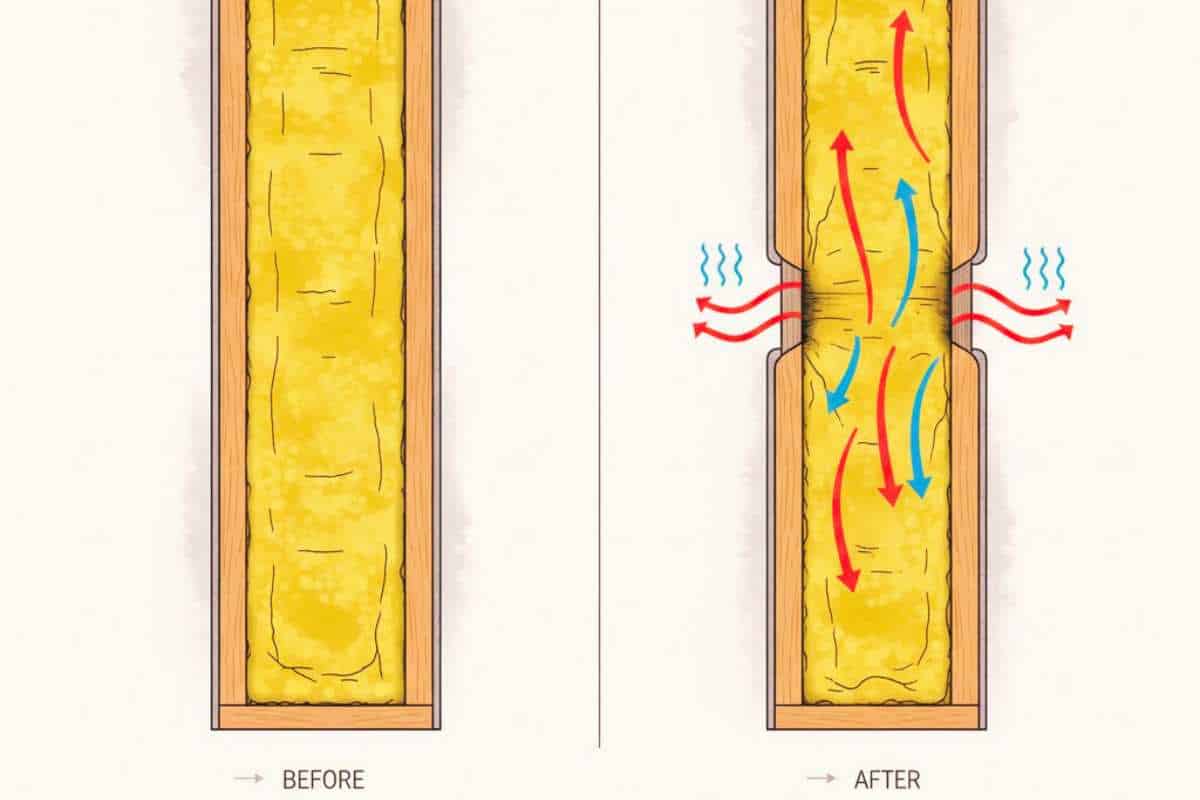
When people ask how long spray foam insulation lasts, they are usually looking for a number. The problem is that numbers without boundaries create false certainty. Spray foam does not have a fixed expiration date. Its longevity exists within ranges that depend on how stable the surrounding assembly remains over time.
Under protected, stable conditions, spray foam insulation often maintains functional performance for several decades. In residential buildings where it is properly installed, shielded from ultraviolet exposure, and not subjected to repeated moisture cycling or structural movement, performance stability commonly falls within a broad multi-decade range rather than a short lifecycle window.
The lower end of that range is typically driven by external stressors, not material failure. Moisture exposure from roof leaks, foundation issues, or unaddressed condensation can degrade adhesion or reduce effectiveness. Structural movement from settling, renovations, or thermal expansion can create separation points that interrupt continuity. Poor installation quality can introduce voids or thin spots that limit performance long before the material itself degrades.
The upper end of the range reflects conditions where those stressors are absent. Assemblies remain dry. Air barriers stay aligned. The foam remains adhered and continuous. In those cases, spray foam does not “wear out” in the way mechanical systems do. Its performance plateaus and holds as long as the surrounding building systems remain stable.
This is why lifespan claims cannot be absolute. Two homes with spray foam installed the same year can age very differently depending on moisture management, air leakage control, and structural behavior. Building science research consistently shows that insulation longevity tracks assembly conditions more closely than product type alone. Guidance from Building Science Corporation and long-term enclosure studies referenced by the U.S. Department of Energy reinforce this system-dependent view of service life.
The practical takeaway is not a number. It is a rule: spray foam lasts as long as the assembly it is part of continues to support it. When performance declines, the cause is almost always a change in conditions rather than material expiration.
Spray Foam Lifespan by Location in the Home
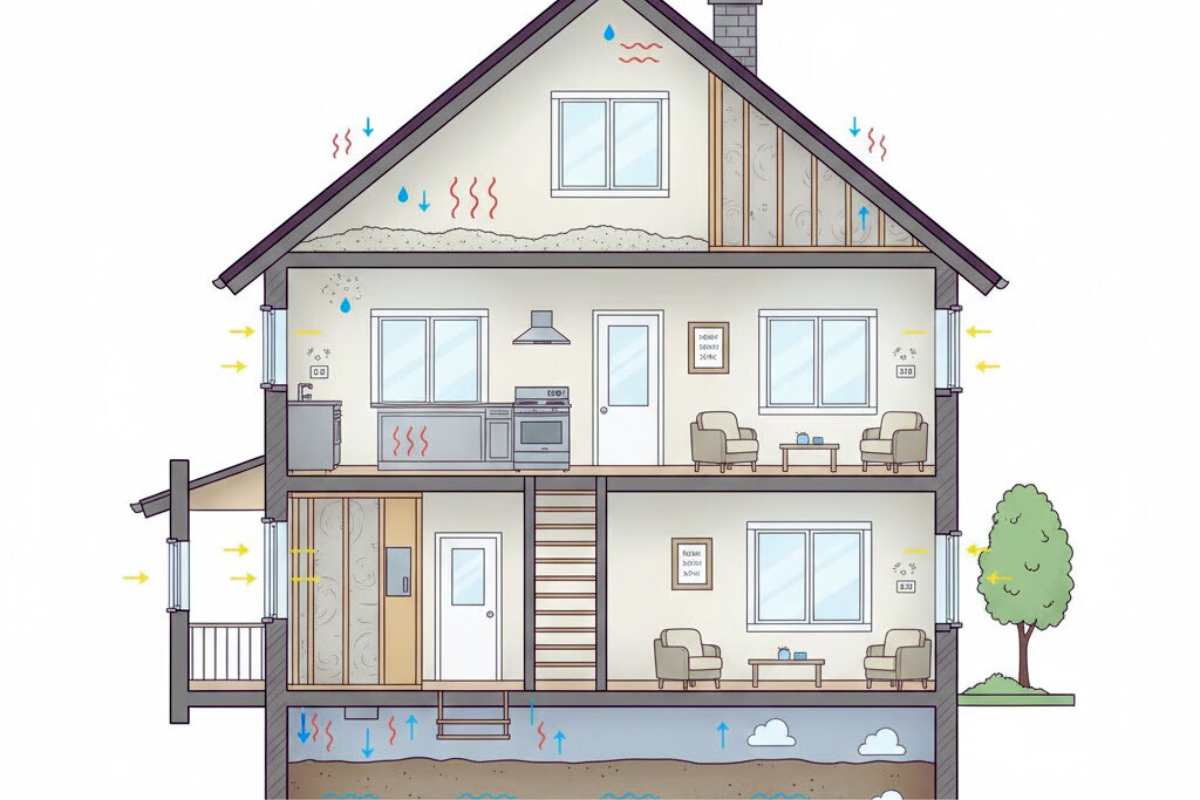
Spray foam insulation does not age uniformly throughout a house. Yes, lifespan differences are driven by exposure conditions within each assembly, not by the foam chemistry itself. Where the foam is installed determines how much thermal cycling, moisture load, and physical stress it experiences over time. Those factors shape whether performance remains stable or slowly degrades.
Attic Rooflines
Spray foam at the roofline experiences the highest stress environment. Roof decks see extreme temperature swings, often moving from freezing conditions to intense summer heat within a single day. That repeated expansion and contraction places stress on adhesion and surrounding materials. When roof assemblies are detailed correctly and moisture is controlled, spray foam can maintain air control and thermal performance for many years. When moisture intrusion or roof leaks occur, degradation accelerates because the foam is exposed to sustained heat and dampness at the same time.
Attic Floors
Attic floor installations are typically the most stable. These areas experience far less thermal cycling and minimal direct moisture exposure compared to rooflines. When spray foam is applied to the attic floor and protected from bulk water and mechanical disturbance, it often maintains adhesion and air control for extended periods. The relative stability of this assembly explains why performance loss is slower here than in other parts of the home.
Wall Cavities
Wall cavities introduce mixed durability conditions. Walls are buffered from extreme temperature swings but are more sensitive to seasonal vapor movement. In mixed-humid climates, walls must manage inward and outward moisture drive throughout the year. Spray foam in wall cavities performs reliably when drying paths are preserved and bulk water is excluded. Performance declines when moisture becomes trapped due to exterior cladding issues, interior humidity loads, or misaligned vapor control.
Rim Joists
Rim joists are high-impact but high-risk locations. These areas sit at the boundary between conditioned and unconditioned space, making them prone to air leakage and condensation. Spray foam often performs well here because it can reduce air movement effectively. However, durability depends on surface preparation and moisture control. Persistent condensation or bulk water exposure can undermine adhesion and reduce long-term effectiveness.
Crawl Spaces
Crawl spaces are not a forgiving environment for spray foam. Ground moisture, limited airflow, and seasonal humidity create sustained exposure conditions that challenge durability. Spray foam in crawl spaces performs best when paired with proper drainage, vapor management, and access control. Without those supports, moisture exposure can persist long enough to affect adhesion and long-term air control. This is where performance loss shows up first when system design is incomplete, because crawl space moisture conditions place very different long-term demands on insulation than walls or attic floors.
Why Location Changes Degradation Risk
Across all assemblies, the pattern is consistent. Spray foam does not fail because it reaches an age limit. It loses effectiveness when exposure exceeds what the assembly can manage. Thermal cycling stresses adhesion. Moisture challenges drying capacity. Physical access and disturbance affect continuity. Assemblies that limit those stressors preserve performance longer than those that amplify them.
Building enclosure research from Building Science Corporation and assembly performance studies summarized by the U.S. Department of Energy consistently show that insulation durability depends on exposure conditions, not just material selection. Understanding where spray foam is installed matters as much as understanding what type is used.
This location-first perspective prevents unrealistic lifespan expectations and keeps durability grounded in how homes actually behave over time.
Open-Cell vs Closed-Cell Spray Foam Durability
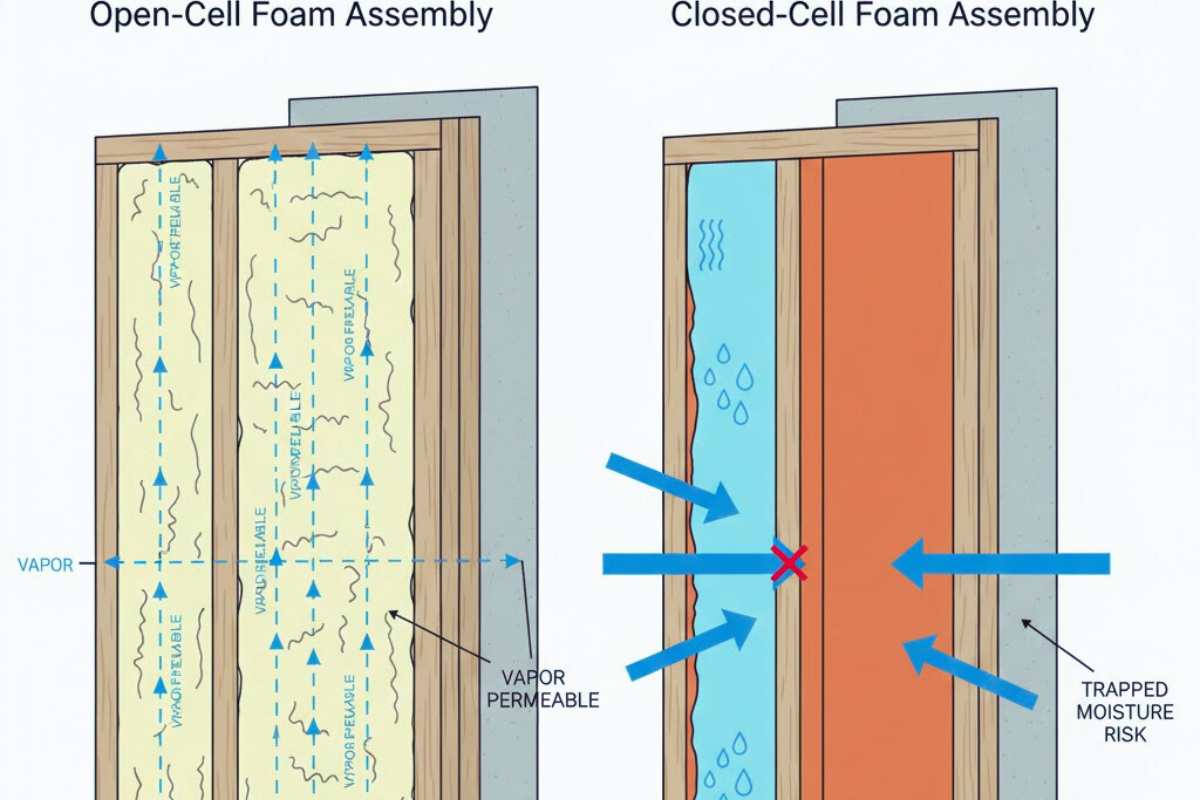
Durability differences between open-cell and closed-cell spray foam come from how each material interacts with air movement, moisture, and structural stress inside a building assembly. Neither material is inherently more durable in all situations. Each responds differently to exposure conditions over time.
Open-cell spray foam has a lower density and remains vapor permeable after installation. That permeability allows assemblies to dry through the foam when moisture enters from incidental leaks, seasonal vapor drive, or indoor humidity. In assemblies where drying flexibility is important, this characteristic can help preserve long-term performance. This is the core reason open-cell spray foam behavior differs from denser foams when moisture management is part of the assembly’s job. The tradeoff is that open-cell foam does not resist bulk moisture exposure and relies on the surrounding assembly to manage water intrusion.
Closed-cell spray foam cures into a denser, more rigid material with low vapor permeability. This density improves resistance to moisture absorption and adds structural stiffness to the assembly. In locations with limited space or higher exposure risk, these properties can support durability by reducing air movement and limiting moisture migration. The same low permeability, however, also changes how the assembly dries. If moisture enters from an unaccounted source, closed-cell foam can trap it against framing or sheathing, accelerating deterioration elsewhere in the system even while the foam itself remains intact.
The durability difference between these materials is therefore conditional. It depends on whether the assembly needs drying capacity or moisture resistance, how water intrusion is controlled, and whether air sealing continuity is maintained. In practice, failures attributed to foam “wearing out” are more often failures of assembly design, exposure management, or installation alignment rather than material breakdown.
Material property data from the Spray Polyurethane Foam Alliance and enclosure research published by Building Science Corporation consistently show that foam longevity is governed by exposure and system compatibility, not by density alone. When open-cell or closed-cell foam is used in assemblies that match their moisture and air control characteristics, both materials can maintain stable performance for decades. When misapplied, durability issues emerge regardless of foam type.
This distinction matters because choosing foam based on perceived toughness or advertised lifespan misses the real durability drivers. Long-term performance depends on whether the foam supports how the assembly manages air, moisture, and movement over time.
Factors That Shorten Spray Foam Insulation Lifespan
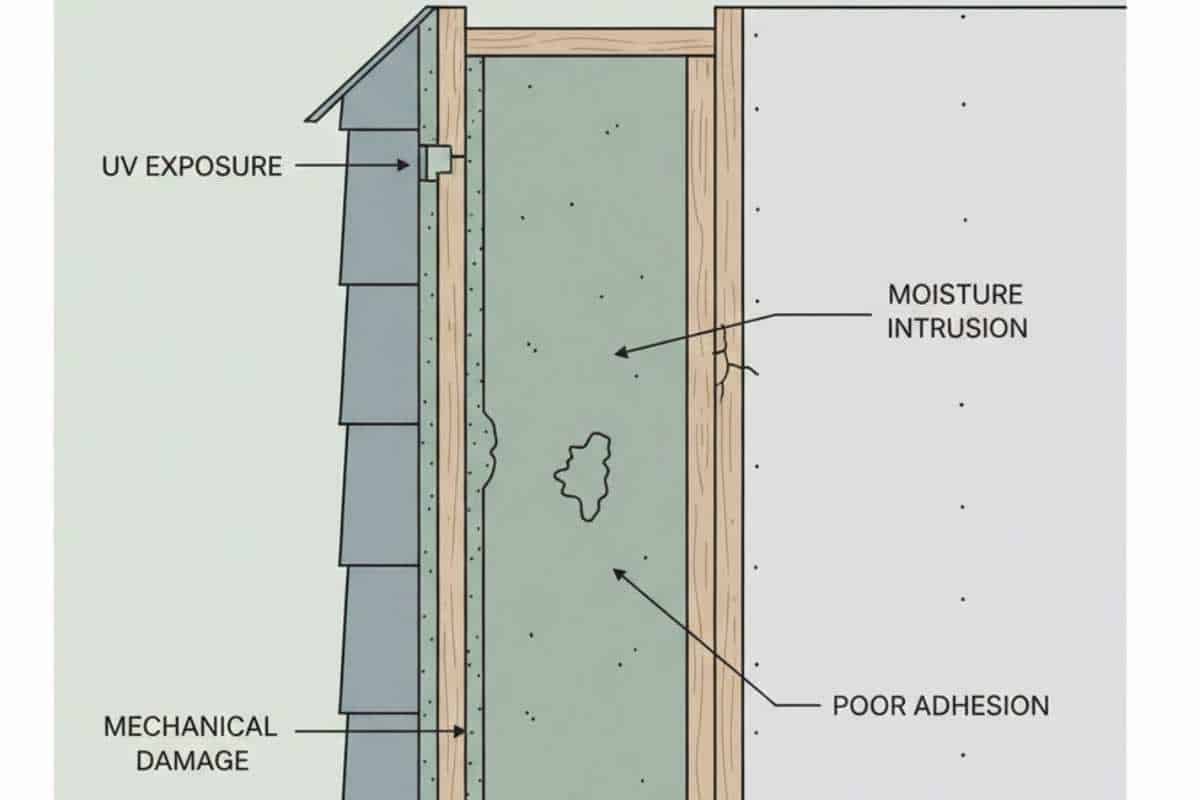
Spray foam insulation rarely fails all at once. In real buildings, lifespan is shortened when exposure conditions or installation details place ongoing stress on the material. When these factors are overlooked, foam does not suddenly disappear. It gradually stops doing the job it was selected to do.
One of the most direct stressors is UV exposure. Spray foam that is left exposed to sunlight, even indirectly, can experience surface degradation over time. Ultraviolet light breaks down the outer layer of foam, which can reduce adhesion and open pathways for air movement. This is why foam used near rooflines or in unfinished spaces typically requires a protective coating or covering to preserve performance.
Moisture exposure is another common contributor to reduced service life, but the mechanism matters. Spray foam itself does not rot, yet repeated wetting and slow drying can stress the bond between foam and the surrounding substrate. When moisture is introduced through roof leaks, condensation, or ground vapor, the issue is not the foam absorbing water. It is the assembly losing its ability to dry predictably. Over time, that condition can compromise both adhesion and thermal consistency.
Mechanical damage often comes from access and use rather than environmental conditions. Foam installed in crawl spaces, rim joists, or storage areas is more likely to be compressed, cut, or displaced during maintenance or renovations. Even small disturbances can interrupt continuity, which allows air movement to bypass the insulation layer and reduces effective performance without obvious visual failure.
Finally, installation quality plays a defining role. Improper substrate preparation, inconsistent thickness, poor mixing ratios, or spraying outside recommended temperature and humidity ranges can all shorten lifespan. These issues may not show immediate symptoms, but they often surface years later as adhesion loss, shrinkage, or uneven thermal performance across the assembly.
Failure analysis research in building science consistently shows that foam longevity depends less on the material itself and more on how well exposure, moisture behavior, and installation conditions are controlled. When those factors are aligned, spray foam can remain stable for decades. When they are not, performance erosion is gradual, subtle, and often mistaken for unrelated comfort or energy issues rather than insulation degradation itself.
Common Spray Foam Failure Patterns Over Time
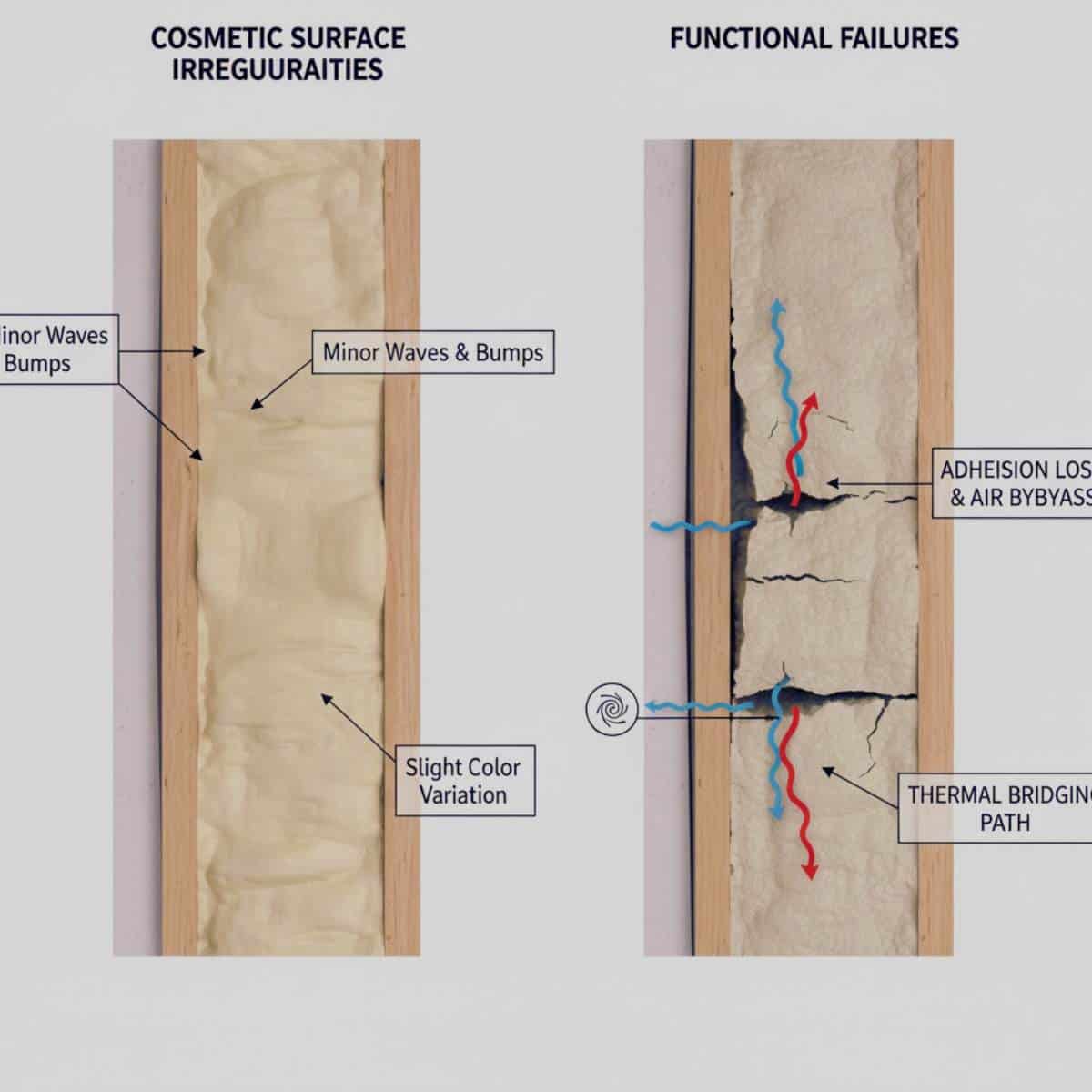
Spray foam insulation rarely fails all at once. In most homes, performance changes gradually as the foam’s interaction with the surrounding assembly shifts. Understanding how those changes present in real buildings helps separate cosmetic issues from problems that actually affect durability or comfort.
One common pattern is adhesion loss. Spray foam relies on strong bonding to framing and sheathing to control air movement. When adhesion weakens due to surface contamination, excessive moisture during installation, or long-term building movement, gaps can form between the foam and the substrate. The foam may still be present, but air can bypass it. That change matters because uncontrolled air movement carries both heat and moisture into areas the insulation was meant to protect.
Shrinkage is another pattern that shows up over time, particularly when installation conditions were outside manufacturer guidelines. Foam that cures too quickly or unevenly can pull away slightly as it ages. Small separations often go unnoticed visually but can interrupt continuity across an assembly. The consequence is not material loss, but reduced air control and less predictable thermal performance.
Moisture trapping tends to appear when spray foam alters drying behavior without that change being intentional. In assemblies that rely on seasonal drying, low-permeability foam can shift where condensation occurs. Moisture may accumulate against framing or sheathing even though the foam itself appears intact. Over time, this affects the materials around the insulation rather than the foam directly.
Odor issues are less common but frequently misunderstood. Persistent odors are usually tied to installation chemistry problems or trapped moisture rather than normal aging. While odor alone does not always indicate functional failure, it often signals that the foam did not cure or interact with the assembly as intended and warrants evaluation.
The critical distinction is whether the foam’s role within the system has changed. Cosmetic imperfections do not automatically indicate failure. Loss of adhesion, interrupted air control, or altered moisture behavior do. Recognizing that difference prevents unnecessary replacement while ensuring real performance issues are not ignored.
How to Tell If Spray Foam Is Still Performing
Spray foam does not stop working quietly. When performance changes, there are usually signals. The challenge is knowing which signs point to real system issues and which are cosmetic or unrelated.
Performance assessment starts with functional indicators, not age. Spray foam can remain in place for decades, but its usefulness depends on whether it is still controlling air movement, supporting thermal resistance, and interacting safely with moisture inside the assembly.
One place to start is with visible continuity. Spray foam should remain adhered to the surfaces it was applied to. Gaps, pull-away from framing, or visible separation between foam and sheathing suggest that air may be bypassing the insulation layer. That matters because even small air pathways can move more heat and moisture than conduction through the foam itself.
Indoor performance symptoms often show up before physical damage is obvious. Uneven temperatures between rooms, new drafts near rim joists or attic transitions, or seasonal comfort complaints can indicate that the foam is no longer acting as a continuous air control layer. These symptoms do not prove failure on their own, but they are strong prompts for closer inspection.
Moisture related signs deserve particular attention. Staining on framing, persistent dampness, or musty odors near insulated assemblies can indicate that moisture is accumulating where the foam has changed drying behavior. The foam may still look intact, but the surrounding materials tell a different story. This distinction is important because spray foam failure often affects adjacent materials before it affects the foam itself.
There are also limits to what a homeowner can reasonably assess. Professional evaluation becomes warranted when signs suggest air leakage paths that cannot be visually confirmed, when moisture exposure is suspected inside closed assemblies, or when performance complaints persist without an obvious cause. Diagnostic tools such as blower door testing, infrared imaging, and targeted moisture measurements are commonly used to determine whether spray foam is still functioning as intended within the system.
Inspection guidance published by the U.S. Department of Energy Building America program and building enclosure evaluation protocols from Building Science Corporation emphasize this approach. Performance is verified by observing system behavior, not by assuming material longevity.
The goal is not to prove that spray foam has failed. It is to confirm whether it is still doing the job it was selected to do. When assessment focuses on function rather than appearance, decisions become clearer and unnecessary disruption is easier to avoid.
Repair vs Partial Removal vs Full Replacement
Once spray foam degradation is identified, the next question is not which option is cheapest or fastest. It is which action path actually restores system performance without introducing new risks. Repair, partial removal, and full replacement are all valid in the right conditions. The difference lies in what the foam is still doing and what it is preventing the assembly from doing.
When Repair Can Be Appropriate
Repair can be appropriate when spray foam remains bonded, dry, and system-compatible. In these cases, the foam is still performing its core roles, but isolated issues reduce overall effectiveness.
Typical situations where repair may be sufficient include localized adhesion gaps, small areas of mechanical damage, or transitions where air control continuity was missed during the original installation. The key condition is that the surrounding foam continues to support air control and does not interfere with drying. Repairs work best when they restore continuity rather than masking deeper problems.
When Partial Removal Is the Better Option
Partial removal becomes necessary when degradation is confined to specific zones but affects system behavior. This often occurs where moisture exposure, UV damage, or improper detailing was limited to one portion of an assembly.
Examples include rim joist areas affected by bulk water intrusion, sections of roofline foam exposed to prolonged humidity, or areas where foam thickness or density varies enough to disrupt air control. Partial removal allows those sections to be corrected while preserving foam that still performs predictably elsewhere. This approach only works when remaining foam can be cleanly integrated into a corrected control layer strategy.
When Full Replacement Is Required
Full replacement is required when spray foam interferes with drying, air control, or structural stability. At this point, the foam is no longer a neutral component of the system. It becomes an obstacle.
Disqualifiers include widespread moisture absorption, persistent odor linked to chemical breakdown, extensive adhesion loss, or foam installed in a way that traps moisture within the assembly. In these cases, repairs or spot fixes cannot correct the underlying mismatch between material behavior and assembly requirements. When those conditions exist, removing compromised insulation is often the only way to reestablish predictable air flow and drying behavior rather than layering new material over an unresolved system conflict.
Building science retrofit guidance consistently emphasizes this distinction. Research and field guidance from Building Science Corporation’s residential retrofit framework show that insulation materials must be evaluated based on how they affect air flow and drying, not simply whether they remain physically intact.
Choosing between repair, partial removal, and replacement is not about escalation. It is about alignment. The correct path is the one that restores control layer function without forcing a material to do a job it can no longer support.
Maintenance and Inspection Over the Life of Spray Foam
Spray foam insulation does not require routine maintenance in the way mechanical systems do. There are no filters to change or settings to adjust. What matters instead is periodic inspection to confirm that the conditions spray foam depends on have not changed.
Maintenance for spray foam means verifying continued performance, not servicing the material itself. Once cured, spray foam remains dimensionally stable under normal conditions. Its long-term effectiveness depends on whether it stays dry, adhered, and protected from damage. When those conditions hold, performance typically remains consistent. When they change, degradation often begins quietly and goes unnoticed.
Inspection matters more than routine upkeep because most spray foam failures are exposure-driven, not age-driven. Roof leaks, plumbing failures, ventilation changes, or building modifications can alter moisture, temperature, or pressure patterns long after installation. Spray foam does not correct those changes. It responds to them. Without inspection, performance issues are often misattributed to “old foam” rather than the condition that caused the shift.
Effective oversight is usually event-based rather than calendar-based. Situations that warrant inspection include roof replacement, HVAC upgrades, water intrusion events, or persistent comfort or odor complaints. Visual checks for adhesion loss, discoloration, surface damage, or moisture staining provide more meaningful insight than routine time intervals alone.
Building durability guidance from organizations such as Building Science Corporation and the U.S. Department of Energy consistently emphasizes that enclosure performance depends on monitoring exposure conditions over time. Spray foam is no exception. The material itself is stable. The building around it is not.
The practical takeaway is simple. Spray foam lasts as long as the conditions that support it remain intact. Inspection is the mechanism that confirms whether that assumption still holds.
Spray Foam Lifespan Compared to Other Insulation Types
Comparing insulation lifespan only makes sense when the materials are evaluated in the role they actually play inside an assembly. Different insulation types fail in different ways, and longevity is shaped less by the material itself than by whether it is asked to perform a job it is suited for.
Spray foam typically maintains functional performance longer than loose or fibrous insulations when it is used in assemblies where air control continuity matters. Because spray foam adheres to substrates and limits air movement, it is less likely to lose effectiveness due to settling, displacement, or internal air bypass. That stability is what often extends its service life, not an inherent immunity to aging.
Fiberglass and cellulose rely on consistent density and placement to perform as intended. Over time, these materials can settle, compress, or be disturbed by air movement, reducing their effective thermal resistance even if the material itself remains present. Mineral wool resists moisture absorption better than fiberglass or cellulose, but it still depends on correct installation and continuity to maintain performance.
The key distinction is not durability as a material property. It is durability as system behavior.
Spray foam’s lifespan advantage shows up most clearly where air leakage would otherwise undermine performance, such as rim joists, rooflines, and complex framing transitions. In assemblies where air movement is already controlled and drying paths are well established, fibrous insulations can perform reliably for long periods with fewer risks and lower cost.
This is why lifespan comparisons break down when they ignore assembly function. No insulation type consistently outlasts the others in every condition. Performance longevity depends on whether the insulation supports the way heat, air, and moisture actually move through that part of the building.
Sources needed: Comparative insulation performance and durability studies from Building Science Corporation, Oak Ridge National Laboratory, and DOE building envelope research
What to Do If You’re Unsure About Your Foam’s Condition
Uncertainty around spray foam performance is common, especially when there are no obvious problems. The mistake most homeowners make at this point is assuming uncertainty itself means failure. In real buildings, uncertainty often means the system needs clearer context, not immediate action.
No, uncertainty alone does not mean spray foam is failing.
Spray foam can continue performing for decades without visible change. Unlike mechanical systems, it does not announce decline with alarms or clear end points. Performance questions usually arise because the foam is hidden inside assemblies where changes are indirect and gradual.
The first step is observation, not intervention. Pay attention to how the building behaves over time rather than searching for defects in isolation. Stable indoor temperatures, unchanged energy use patterns, and the absence of moisture related symptoms often indicate that the insulation system is still functioning as intended, even if its age is unknown.
Uncertainty becomes actionable only when paired with specific indicators. These include persistent odor, new moisture staining, unexplained comfort changes, or visible separation where foam is exposed. These signals point to a potential change in how the assembly is managing air or moisture, not automatically to foam failure itself.
Many articles default to inspection as the next step. In practice, observation is often sufficient when conditions are stable. Professional evaluation becomes useful when symptoms suggest that the insulation’s role in the system may have changed, not simply because time has passed.
Building enclosure guidance from organizations such as Building Science Corporation emphasizes condition based evaluation over age based assumptions. The goal is to determine whether the insulation is still performing its role within the assembly, not whether it looks new.
When uncertainty is approached this way, decisions become clearer. Some situations call for continued monitoring. Others justify deeper evaluation. The difference is not guesswork. It is tied to how the building behaves, not how long the foam has been in place.
How to Think About Spray Foam Lifespan
This is the mental model that holds everything together. If you walk away with this framework, you can evaluate claims, inspections, and recommendations without guessing.
- Lifespan refers to performance, not permanence.
Spray foam does not suddenly fail or disappear. What changes over time is how well it continues to control heat flow and air movement within a specific assembly. Foam can still be present while its contribution has declined due to moisture exposure, separation, or system misalignment.
- Location inside the building matters more than age alone.
Foam applied at a roofline, rim joist, or crawl space experiences very different temperature swings, moisture loads, and physical stress. Those exposure conditions influence durability far more than how many years have passed since installation.
- Moisture and air movement shorten service life faster than time.
Spray foam ages most predictably when it stays dry and bonded to the surfaces it was designed to seal. Chronic humidity, bulk water intrusion, or uncontrolled air leakage accelerate degradation long before material age becomes the limiting factor.
- Open-cell and closed-cell foam age differently because they manage drying differently.
Density and vapor permeability change how each material interacts with moisture over time. Neither is inherently longer lasting in all situations. Durability depends on whether the foam’s drying behavior matches what the assembly actually needs.
- Installation quality sets the ceiling for long-term performance.
Poor adhesion, inconsistent thickness, or misaligned control layers limit how long spray foam can perform effectively. Well-installed foam in a stable assembly tends to age gradually. Poorly installed foam often shows problems early.
- Observation and building behavior matter more than labels or dates.
Comfort changes, odors, moisture staining, or uneven temperatures provide more useful signals than manufacturer lifespan claims. Evaluating how the building behaves tells you more about foam performance than assuming age alone dictates condition.
Taken together, these points explain why spray foam lifespan cannot be reduced to a single number. Durability is the result of material properties, installation quality, assembly design, and ongoing exposure conditions working together over time.
Making Sense of Spray Foam Insulation Longevity
Spray foam insulation does not fail on a schedule. It either continues to support the building system it was installed into, or it slowly stops doing that job as conditions change around it.
If there is one takeaway worth anchoring to, it is this: how long spray foam insulation lasts depends less on time and more on context. Context means where the foam is located, how it was installed, how the assembly manages moisture and air, and whether those conditions have stayed stable over the years. Foam that remains dry, bonded, and aligned with the building’s drying paths often performs for decades. Foam exposed to moisture, movement, or system conflicts can lose effectiveness much sooner, even if it still looks intact.
This is why lifespan questions are best answered by observing performance rather than relying on age or blanket claims. Comfort changes, moisture signals, odors, or uneven temperatures usually provide clearer insight than manufacturer timelines. When those signals are absent, observation may be all that is needed. When they appear, evaluation becomes the next logical step.
Understanding spray foam longevity is ultimately about understanding buildings. When the building works, the foam tends to work with it. When the building struggles, the foam often reveals those problems rather than causing them. Keeping that perspective makes durability decisions clearer, more grounded, and far less dependent on guesswork.